
AESTHETICS AND CRITICISM | 2019
As an amateur photographer and architecture student, I always took photographs of the faculty during my undergraduate education. The faculty building offered many excellent views to me, and I enjoyed using it as my model. But what was exciting for me was that when I took the photographs, I saw that the building posed differently in every single photograph, although I used similar angles, and on every new shooting day for six years, I recognized new features of the faculty behind the camera. Those facts made me consider the faculty as an unstable, living phenomenon and search for further changes in this 60-year-old building.
For my final project for the AH513-Aesthetics and Criticism, a grad course by Prof.Dr.Jale Nejdet Erzen, I tried to show the unstable characteristics of the faculty and how it changes and is in motion. The idea was that I could follow the changes as a photographer, but maybe many students don’t recognize them. I thought it could increase the aesthetic experience of faculty users by giving them a chance to look at the faculty behind a camera and follow its unstable features. That idea made me create a stop-motion video showing the faculty’s dance.
My video offers views from different angles and at different times of the day. The changes in the architecture with the sunrise and sunset, the significant light games of the noon time, the motion of the natural elements, and the motion provided by the artificial lights at night were shown and given in an artistic way in the video. And people of the faculty are given a chance to experience the motion of faculty at a pace since they may not recognize any of those changes in their daily routine. A commonly used space, the staircase, coming from the canteen to the studios, was used as the area of the show to reach more people in a hurry for architectural education.
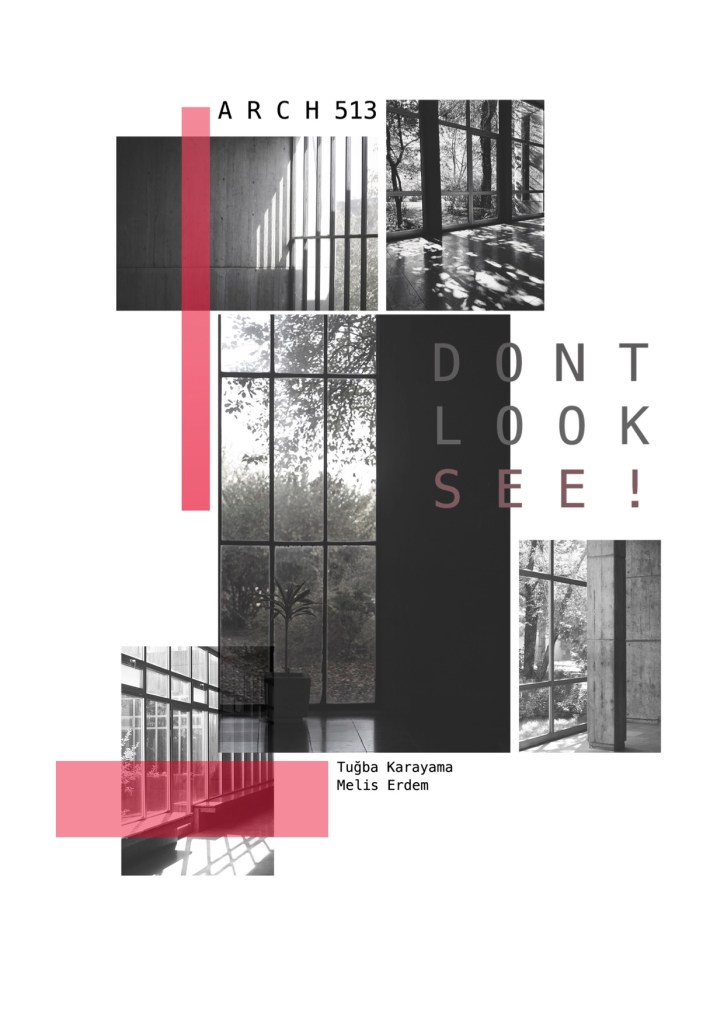
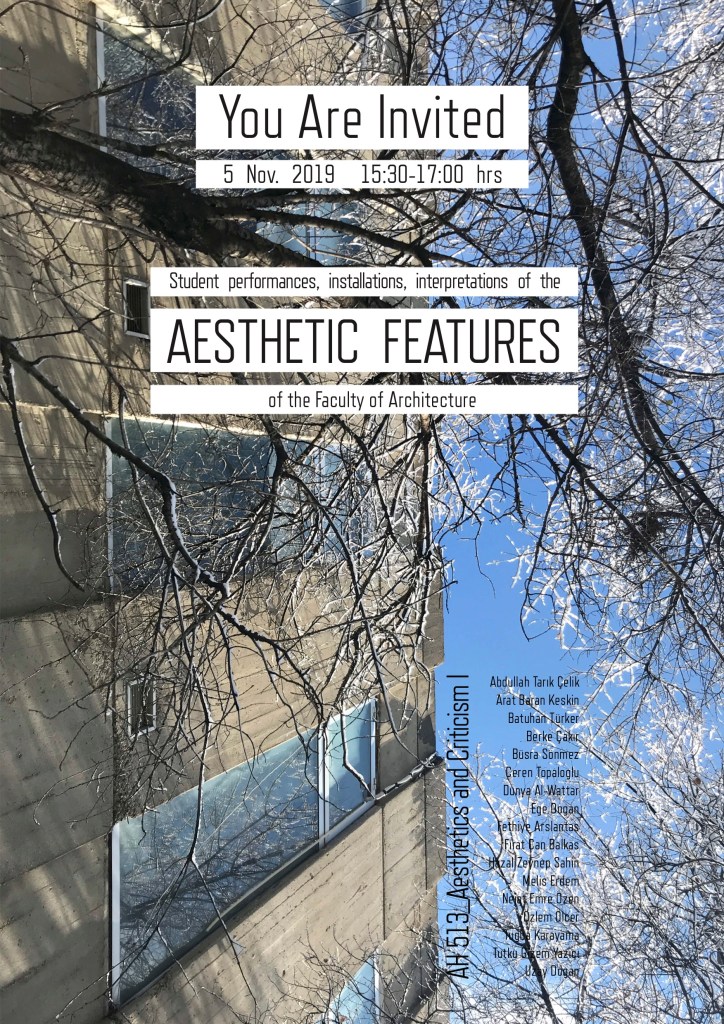
For the mid-term project of the grad course, Aesthetics and Criticism, we were asked to emphasize the aesthetic features of our faculty.
The building of the Faculty of Architecture, designed by Behruz Çinici, provides so many aesthetic views with impressive use of sunlight and brutalist design elements. Some of those views serve everybody, but some are hidden in unexpected places for the eyes want to see more. As a photograph enthusiast, I have spent my undergraduate years enjoying the aesthetic of the building behind my camera. However, from what I have observed, many of my classmates were not seeing them all.
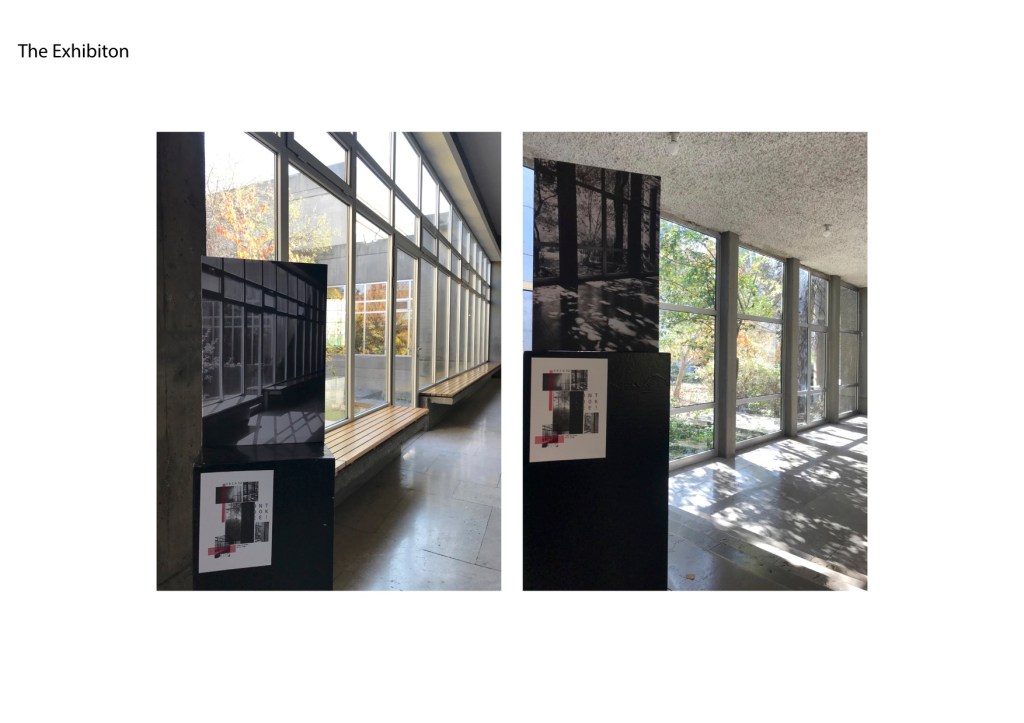
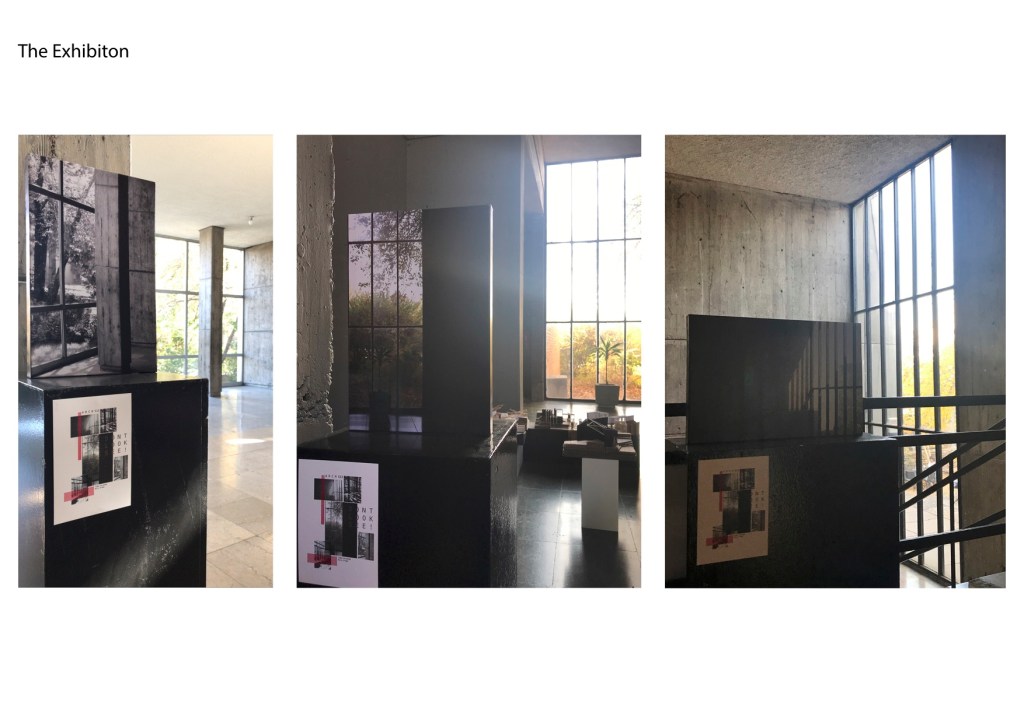
So, my friend Melis Erdem and I decided to show those views from our look to everybody. By locating the photographs we have taken at different times in the faculty, next to the places they’ve been taken, we tried to invite people to focus, see and experience the faculty.
In the end, we have positive comments from the audience. Some of the reactions were, “Wow, did you take this photograph in here?”, “I’ve never seen this light pattern; at what time did you take the photograph?”. It can be said that we did succeed and emphasized the building’s aesthetic.
You can find the photographs from the exhibition below.
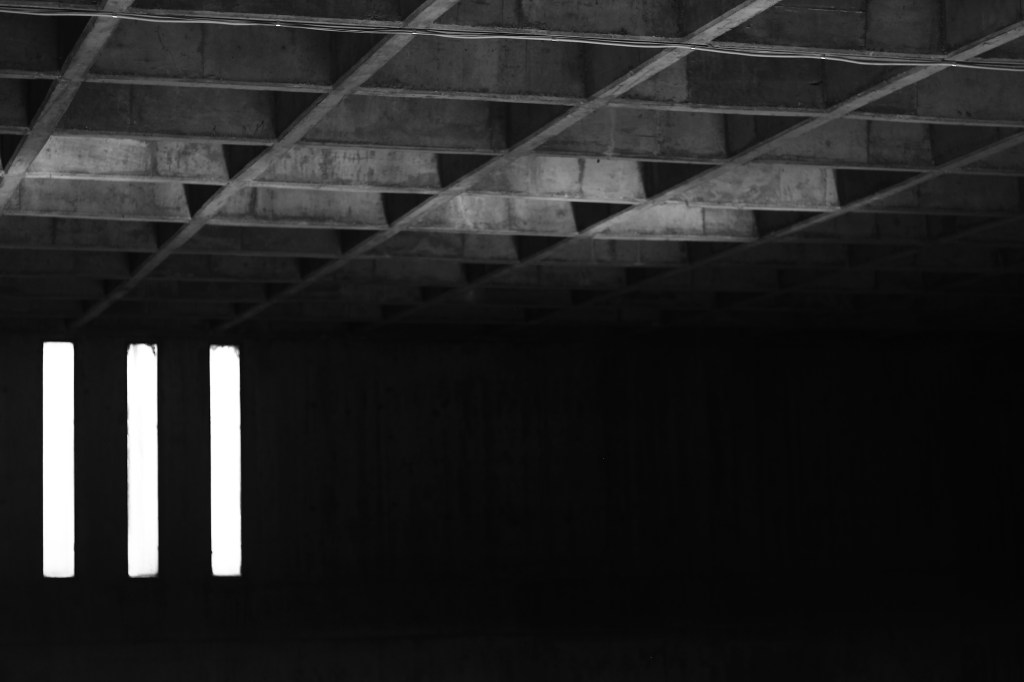
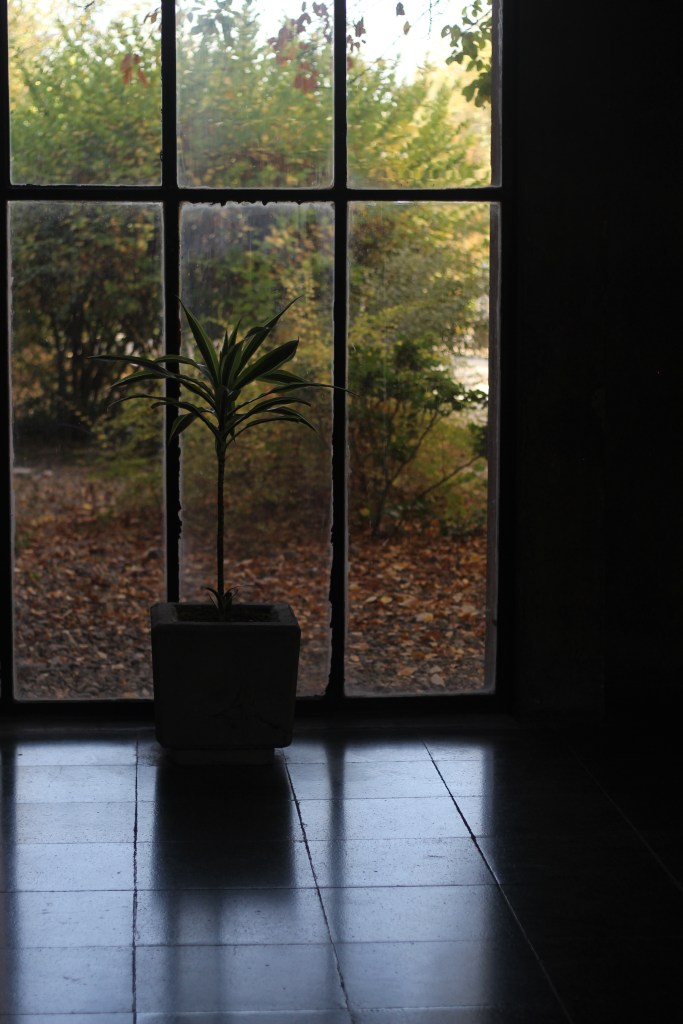
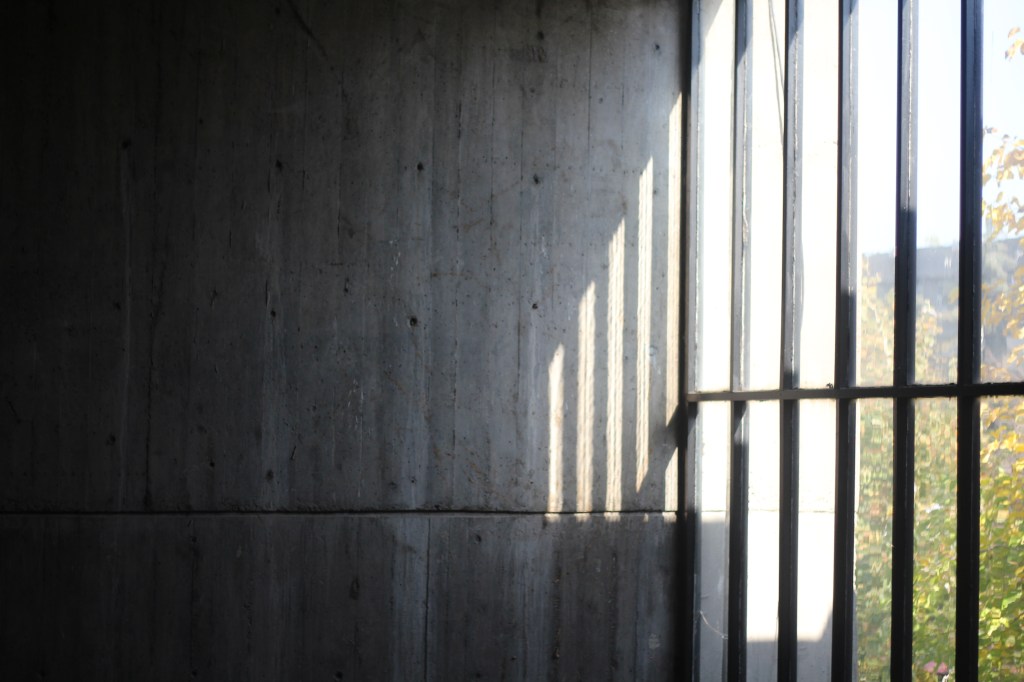
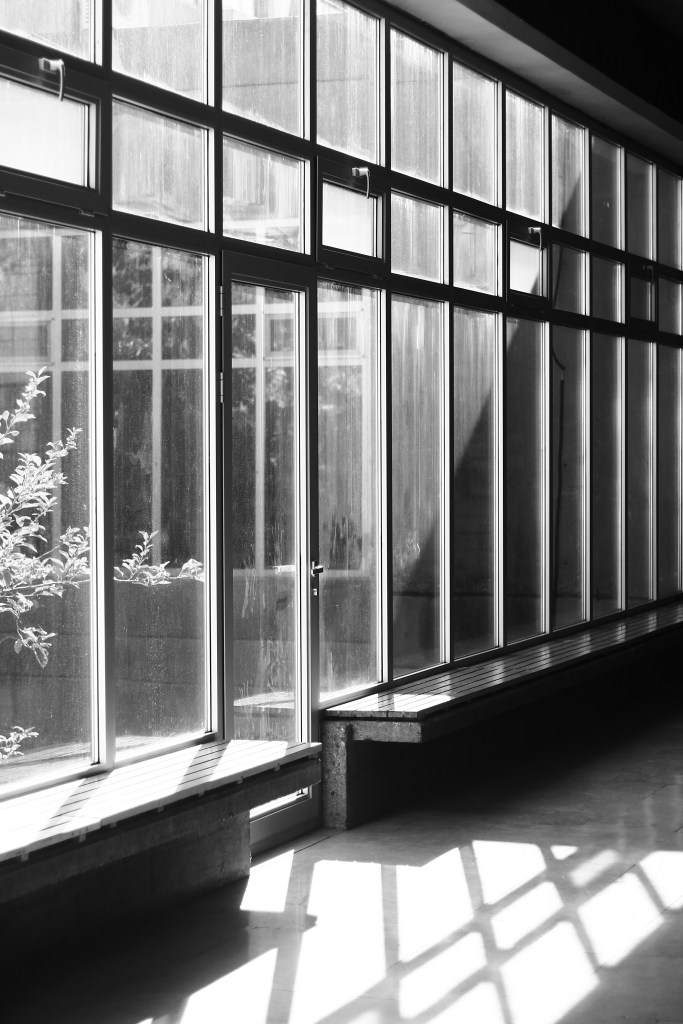
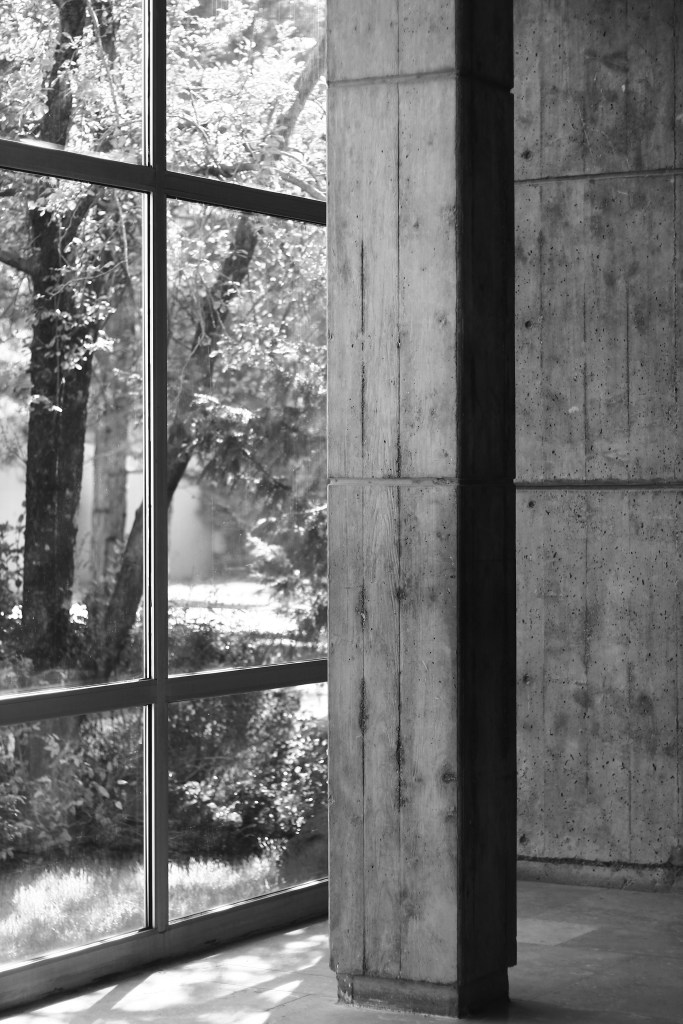
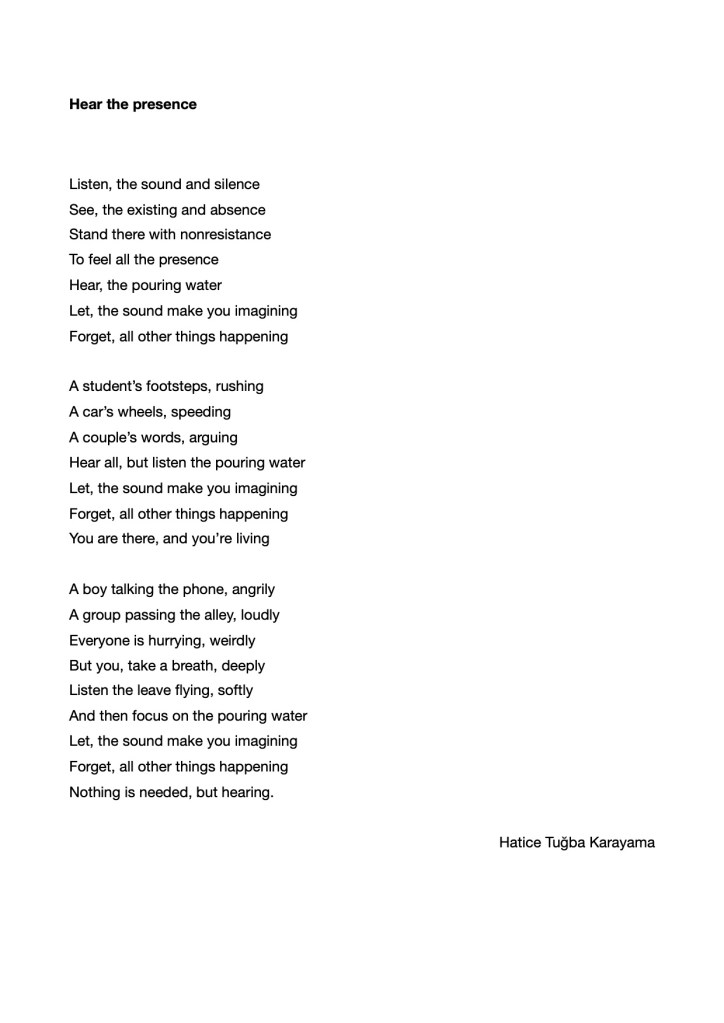
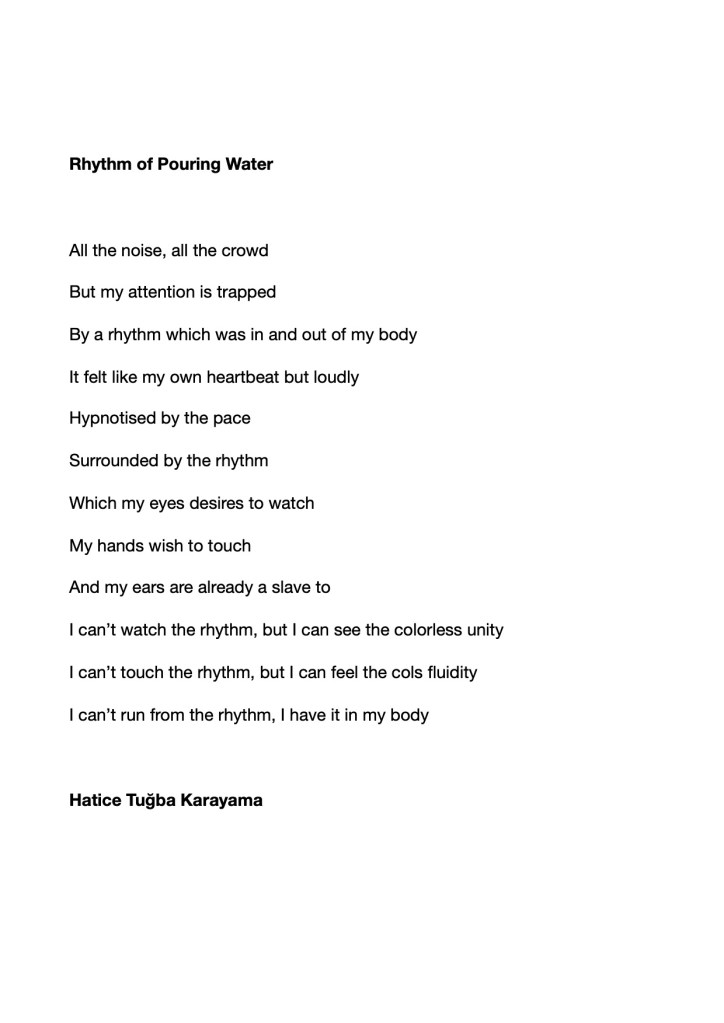
During the grad course, Aesthetic and Criticism, Prof.Dr.Jale Erzen asked us to focus on our architectural experience and put it in words. While standing at the faculty building’s entrance with a pool, I have written those two poems. Since I am not gifted with poetry, the poems were not aesthetic enough, but my experience was more intense than ever.
——————————————————————————————————————
PRINCIPLES OF UNIVERSAL DESIGN | 2019
Within the scope of the course, a class project was designed to measure how well children of the primary school age group know about universal design and whether they do not see the concept in detail by name and definition. In this project, we have worked with 5th and 6th-grade students of Tevfik Fikret Schools. One of the most significant advantages of the project was that these students were taking art classes. Therefore, they were already experienced in abstract thinking and designing. However, in order to increase children’s participation in the study, it was necessary to find a topic that would interest them. For this reason, we decided to ask them, “What fun activity do you enjoy most in nature?”. As a group, we prepared a fun tree, using both the universal design principles, and named it “the tree of thoughts”. Before starting the design sessions, all class shared their ideas about the activity in nature and put them in the tree. When brainstorming ended, the children who shared similar thoughts formed groups, and the design process took place within those small groups.
Phase 1. Clarification of the Shared Class Experiences and Prioritization of Activities Meaningful for Small Groups
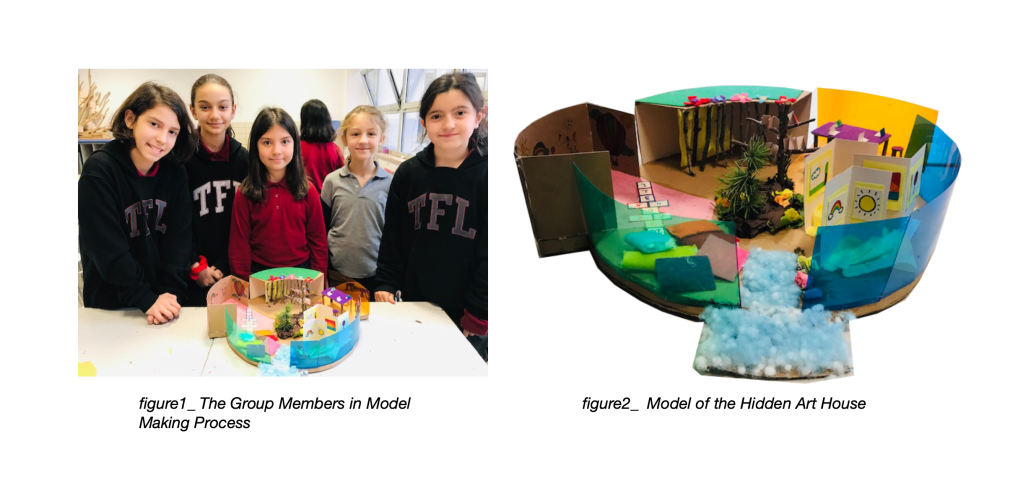
The members of our group, Alya, Selin, Ela, Lara, and Ela, have chosen to work on ‘artistic activities’, focusing primarily on painting. After getting started to design, the definition of artistic activities got wider for them. In the end product, they created spaces for crafting, playing piano, reading books, and even playing hopscotch.
Phase 2. Deciding on the Most Fun Activity and Imagining of the Place (outdoor, indoor, object) of that activity
In the session of deciding the most fun activity, our students all decided together in a strongly democratic way. The activity was decided in seconds; art was going to be the theme. However, they were two ideas about the design product; designing an open space or a closed one for art. This haziness took only a few seconds, and they solved the problem by designing a space with both indoor and outdoor areas. The level of shared decision-making was admirable.
Phase 3. Drawing the plan, section
All our students were willing to design and work, but this high excitement sometimes turned into a handicap. Since they desired to start producing the very end product, following the design process step by step was a little tricky. There were times when the students lost focus, but since they respected us, little guidance was more than enough for them to continue. However, because of that loss of focus moments, the first drawing session couldn’t end with a design that could be modeled.
In the second week of the drawing session, every decision was again made democratically. The students answered our directions with improved versions of our ideas. Their ability to exchange ideas in a naive way took my attention. Only one of the students showed discomfort and lack of confidence, but she was respected as a member of the community by other members. This respectful environment encouraged her to continue participating in group work.
Producing plans and section drawings were difficult for them since they think in three dimensions. This is why the last version of the representation was a collage with walls in plan and trees in elevation. This rich, flexible, tolerating drawing requires simple thinking and complicated representation skills.
Also, in this session, the UD principles were given to the students by trying to direct them to design an inclusive environment. By making them question what if a student with different abilities attempted to use the designed space, we wished to make them notice barriers. After one or two examples, they gained awareness and created an environment for all, and offered equality in use.
Phase 4. Constructing the model
After finishing the drawing session, the model-making process directly began. We tried to make our students meet with the scale. It was pretty hard for them to perceive; this is why they couldn’t decide the proper dimensions of each design element. But again, little guidance was enough for them to reconsider their design.
In the second session of model making, since our students didn’t lose their enthusiasm even if it was the third week, we all worked efficiently. During this session, I thought that all of our students were thinking in a detailed way. The cover design of decorative elements and the quality of the smallest paintings had a lot of importance to them. While producing a complex model, they shared workload fairly. All of them were willing to do more, but they respected their friend’s role in the design. Moreover, they didn’t hesitate to assist each other; this modest attitude was laudable.
CONCLUSION
Before concluding the small group work in detail, I must say that I had prejudices and worries about creating a design product with a group of children; these negative pre-thoughts were the results of assuming that children won’t be able to cooperate and communicate with us. After the effort they put in and the end products they have designed, it is my duty to confess that I was utterly wrong, and I have felt embarrassed in every phase of the project.
After showing democratic decision making, cooperation, chawed action, and modesty, our lovely group produced a well-designed detailed model of a hidden art house which has outdoor and indoor spaces with a pool, a painting wall, an exhibition labyrinth, a hopscotch area, an inner garden, a kitchen, a reading corner, and a tree bookshelf. Their design is flexible enough to host various activities, is simple to use, and is an attractive art house that offers inclusivity and equality in use.
With their attitudes in process, their ability to cooperate and communicate, and their talent, every member of our group (Ela, Selin, Ela, Arya, Lara) taught me a lesson and made me enjoy working with younger individuals.
——————————————————————————————————————
CREATIVE MAPPING TECHNIQUES IN ARCHITECTURE | 2019
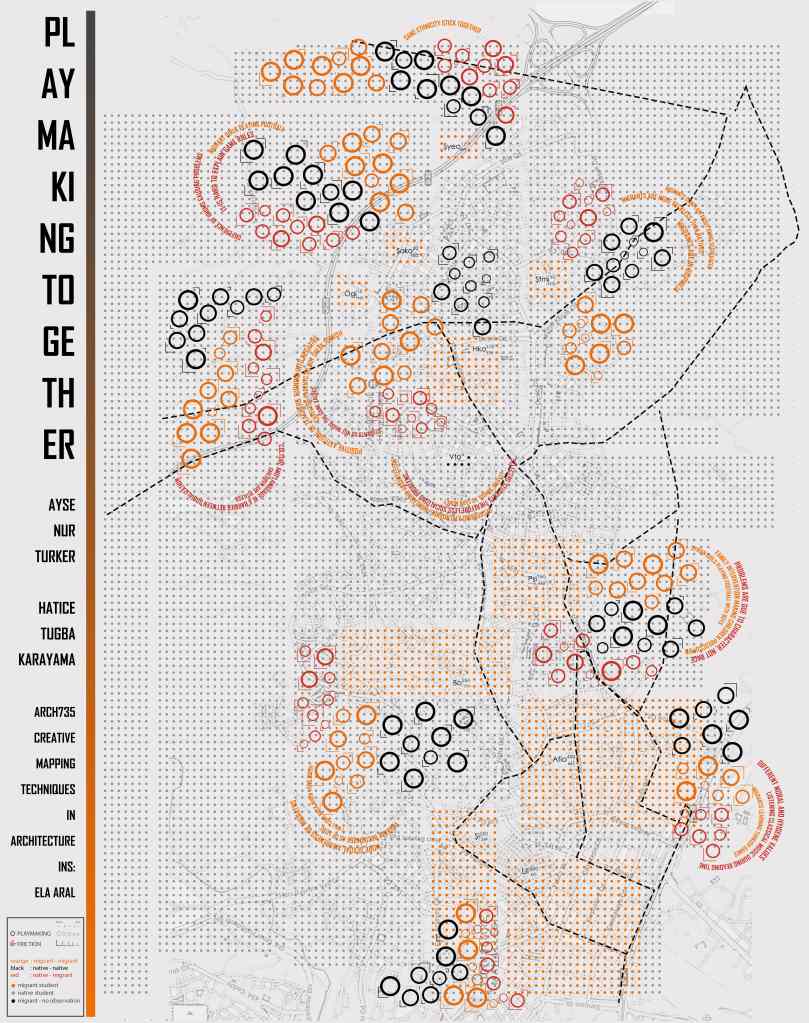
The mapping of ‘Playmaking Together’ was aimed to find the ways to present multiple variables which are independent seeming from each other; and bound variables by abstraction. Eugene Turner’s experiment of introducing various data in a way that people can readily comprehend
utilizes people’s ability to be alert to subtle differences. By adopting this theory and layering theory to our discussion, the method of the map, which studies the relationship between native and immigrant
students, was created.
Assuming that migrant children may suffer from a poverty type which is a result of not being able to generate playing groups; since playing groups affect playing and so healthy growing. In other words, language and cultural differences may prevent migrant children from constructing a
relationship with their native counterparts and growing up healthily. To study that assumption, the migrant student population in elementary schools was searched, and it was seen that there is a dense population in Altındağ.
To find out whether can migrant students and native ones play together or if there is friction between them, it was necessary to observe the schools. Since it is difficult (a) to follow schoolyards with differentiating migrant and native students and (b) to generalize according to short-term
observations; it was thought that getting help from long-term observers’ ,teachers’ , considerations can provide a more reliable datum for the study. A questionnaire was prepared to utilize their observations.
To visualize this study, the theory of layering was used. In the first layer, the living space was shown by abstracting the number of migrant and native students; this layer also indicates the change in the density of migrant students in the selected portion of Altındağ. Above the layer of student numbers, the datum achieved from the questionnaires -the relationship of students, friction or friendship- was illustrated by getting help from Eugene Turner’s ideas. Employing subtle differences in the geometrical forms made it possible to see various relations between students. Behind this illustration layers, there is a reference from a conventional map of the district; therefore, by looking at the map of ‘Playmaking Together’, one can grasp the comparative structure of
collected data related to the urban life narrative of children.
References;
Harmon, K. (2004). You Are Here; Personal Geographies and Other Maps of Imagination. New York, USA: Princeton Architectural Press
ARCH 735 | CREATIVE MAPPING TECHNIQUES IN ARCHITECTURE | Visualizing an Existing Study | 2019
It is known that playing is an essential factor that affects children’s psychological development and gaining many abilities, such as artistic and social skills. All children deserve to have opportunities to play to grow healthy, but what if playing shows differences among different socioeconomic levels. That can mean that children of low-income families suffer from a poverty type generated by lack of play. This study aims to search for a possible definition of poverty by looking at playgrounds and play styles of children and to visualize the definition.
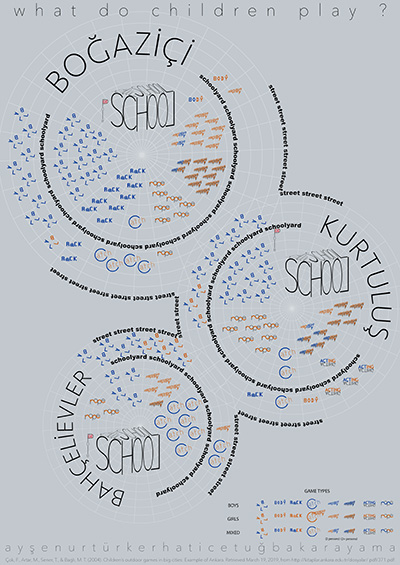
The study of “Children’s outdoor games in big cities: An example of Ankara” was undertaken to see the play types of children in Ankara and the differences that those plays show in regions with low, middle, and high socioeconomic levels. Boğaziçi, Kurtuluş, and Bahçelievler (from highest poverty level to lowest) were chosen to search. Children and their plays were observed in one school and one street in each region. To reach solid results, play types of children were classified as; ball games, body games, singing games with two people, singing games with more than two people, rock games, acting games, rope games, and catching games. Our map was designed to show the results of that study.
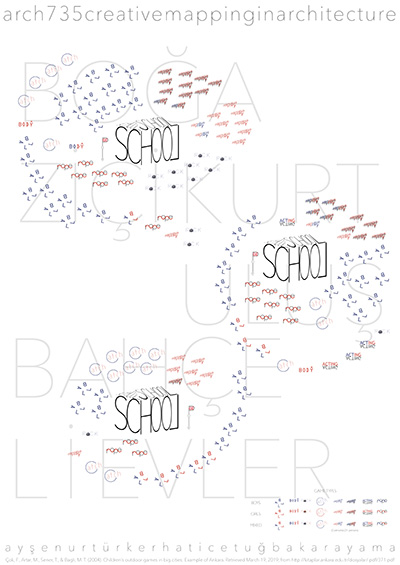
The script map is designed in a joyful way since it shows the plays of children. Firstly, the three regions are shown in the income level order, and the areas’ diameters were arranged to indicate that level. Secondly, street and schoolyard areas were separated in each region, as the observations were made separately in those areas. Afterward, for every play type, a verb icon was designed by getting inspired by the play itself. For each play, verb icons were colored to indicate genders. And lastly, verb icons were located on the map by the reference to the numbers which were given in the study. In the end, a script map that visualizes the results of the study was achieved.
Some of these results can be summarized as follows;
– although, popular culture and mass communication devices affect what children play and make them play the same type of play. The frequencies, players, play areas, and gender shows that socioeconomic status affects children’s play. For example, there aren’t any children who play with rocks in Bahçelievler.- gender expectations and traditional roles of genders are more visible in low socioeconomic areas; there are more girls in school than on the street, and the plays are gender-related in those areas.
The study that has been visualized;
F., Artar, M., Sener, T., & Baglı, M. T. (2004). Children’s outdoor games in big cities: Example of Ankara. Retrieved March 19, 2019, from http://kitaplar.ankara.edu.tr/dosyalar/pdf/371.pdf
 haticetugba.com